
Misted Double Glazing, Can You Replace Just the Glass?
Repairs · 29 September 2026 · Kieran Myers
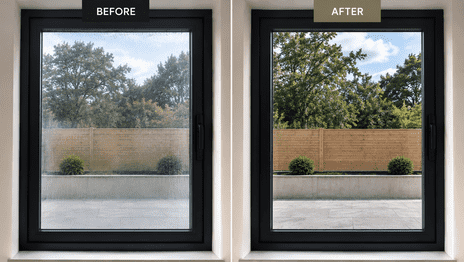
Yes. In most cases misted double glazing is fixed by replacing only the glass, meaning the sealed unit that sits inside the frame, while the frame, hinges and locks stay where they are. The mist can't be cleared, because it forms inside a sealed gap that can't be opened without ruining the unit, but a new unit made to the same size fits straight into the existing frame. When we replace failed or damaged glass, we keep the customer's existing frame 90% of the time.
A whole new window only makes sense when the frame itself is the problem. That means a frame that is warped, cracked or rotten, a sash that no longer closes properly, or an old installation where several units are failing at once and draughts are getting in as well. If none of that applies, you need a new glass unit, and you can keep the window.
How to tell the glass has failed
Condensation can form in three places, and only one of them means the unit has failed. Wipe the glass on the room side first. If the moisture comes away on your cloth, it is condensation from the air in your home settling on cold glass, and a new unit won't cure it. Then look at the outside. Moisture on the outer pane on a cold, clear morning is normal for modern glass, and the Glass and Glazing Federation calls it visible evidence of the energy efficiency of the window, because the heat staying indoors leaves the outer pane cold.
If the mist is still there after you have wiped both sides, it is between the panes, and the seal has gone. In the early stages it often comes and goes with the temperature and the time of day. Over time it tends to stay, and if it is left for long enough it can leave a whitish film or water marks on the inside faces of the glass, where no amount of cleaning will reach.
What is inside a sealed unit, and why it fails
A double glazed unit is two panes of glass held apart by a spacer bar around the edge and sealed together. The gap is filled with dry air or a gas such as argon, and the spacer holds a drying agent that soaks up the small amount of moisture trapped inside when the unit is made.
The seal keeps any more moisture out. The glass warms and cools every day, and the unit expands and contracts with it, which slowly works at the seal. Once damp air starts to get in, the drying agent absorbs what it can until it is full, and after that the moisture condenses on the glass.
A unit can also fail early for reasons that have nothing to do with age. Water sitting in the bottom of the frame, where the drainage slots have blocked, keeps the edge seal wet. A unit that wasn't packed properly when it was fitted can be under strain at one corner. We've found that the frame is the first thing worth checking when a unit has failed young, because if water is collecting around the glass, a new unit will go the same way unless that is put right as well.
Replacing the unit or the whole window
In our experience, replacing the sealed unit works better than replacing the whole window when the frame is sound, because a uPVC frame usually outlasts the glass unit inside it, and a new unit brings back clear glass without paying for a frame and a fitting you don't need. The Glass and Glazing Federation's advice on when to repair or replace windows says the same about condensation between the panes, that the sealed unit needs replacing and that a window repair company can usually do it once exact measurements have been taken.
Some companies offer to drill misted units, dry them out and fit small valves. We don't recommend it. The seal that let the moisture in is still broken afterwards, and a unit with holes drilled in it can no longer hold argon. The mist may clear for a while, but the unit hasn't been repaired.
A new window is the better answer when the frame is damaged, when the hinges and locks are worn across several windows, or when the windows are old enough that their energy performance is well behind today's standard. For comparison, a whole replacement window fitted in an existing home in England has to reach a U-value of 1.4 W/m²K or a Window Energy Rating of band B, under Approved Document L of the building regulations. Our windows and doors page explains what those two measures mean for a home.
What replacing a misted unit involves
The first step is measuring. A sealed unit is made to order for the opening it goes into, so we measure the width, the height and the overall thickness of the old unit, and note anything that needs to match, such as obscure glass in a bathroom, Georgian bars, or the colour of the spacer bar. Sending a photo of the window on WhatsApp gives us a head start before we come out.
The glass also has to suit where it sits. The building regulations call for safety glass in what they call critical locations, which the Planning Portal lists as including any glazed panel up to 800mm from the floor and any glazed door up to 1500mm from the floor. Glass in those places should be toughened or laminated, so if an old unit in a low panel or a door was ordinary glass, its replacement should be safety glass even though the original wasn't. We check this when we measure.
Once the new unit has been made, fitting it is quick compared with fitting a new window. The glazing beads come out, the old unit is lifted out, the packers underneath are checked and replaced if they need it, and the new unit goes in and is beaded back. The frame isn't disturbed, so there is no making good to the plaster or the brickwork around it.
Low-emissivity glass, which the Glass and Glazing Federation describes as an essential part of most energy-efficient windows and doors, is normal in units made today. A replacement can therefore perform better than the unit it replaces, especially when the original went in many years ago.
Doors, bifolds and bathroom windows
The glass in a door is replaced the same way. A misted panel in a uPVC or composite front door, a French door or a patio door is a sealed unit like any other, and in most cases it can be changed without touching the door itself. Door glass sits in a critical location, so the new unit will be safety glass.
The large panes in aluminium bifold doors can be replaced too. Their size and weight mean they need two people to handle, and they have to be ordered to the exact size of the panel. Bathroom windows usually have obscure glass, and there are many patterns, so the pattern is one of the things we record when we measure.
Does misted glass need fixing straight away?
A misted unit isn't dangerous. The glass is as strong as it was, and the window will still lock and keep the weather out. What you lose is the view and some of the insulation, because a unit with a failed seal can't be relied on to hold the dry air or gas it was filled with. It won't clear up on its own, though, and the longer moisture sits in the gap, the more likely it is to mark the glass.
Cracked or broken glass is different, and it should be made safe as soon as possible. We provide emergency glazing, which may mean securing the window first and coming back with the new unit once it has been made. Emergency call-outs are available 24 hours a day through WhatsApp.
A typical repair visit
Misted units often turn up alongside other small faults, and it makes sense to deal with them together. A customer in Maidstone who has used us several times had three misted units replaced this summer, in the same job as new window hinges and a new back door lock. The before and after photos on our repairs page show what the change looks like on a single window, from a unit you could barely see through to clear glass in the same black frame.
If the mist is between the panes and the frame is in good order, you will usually only need a new sealed unit. Contact us at KM Glazing with the rough size of the window or a photo of it, and we will arrange a free, no-obligation quote to measure up and replace the glass.
