
Composite or uPVC Front Door, Which Is Better?
Doors · 2 October 2026 · Kieran Myers
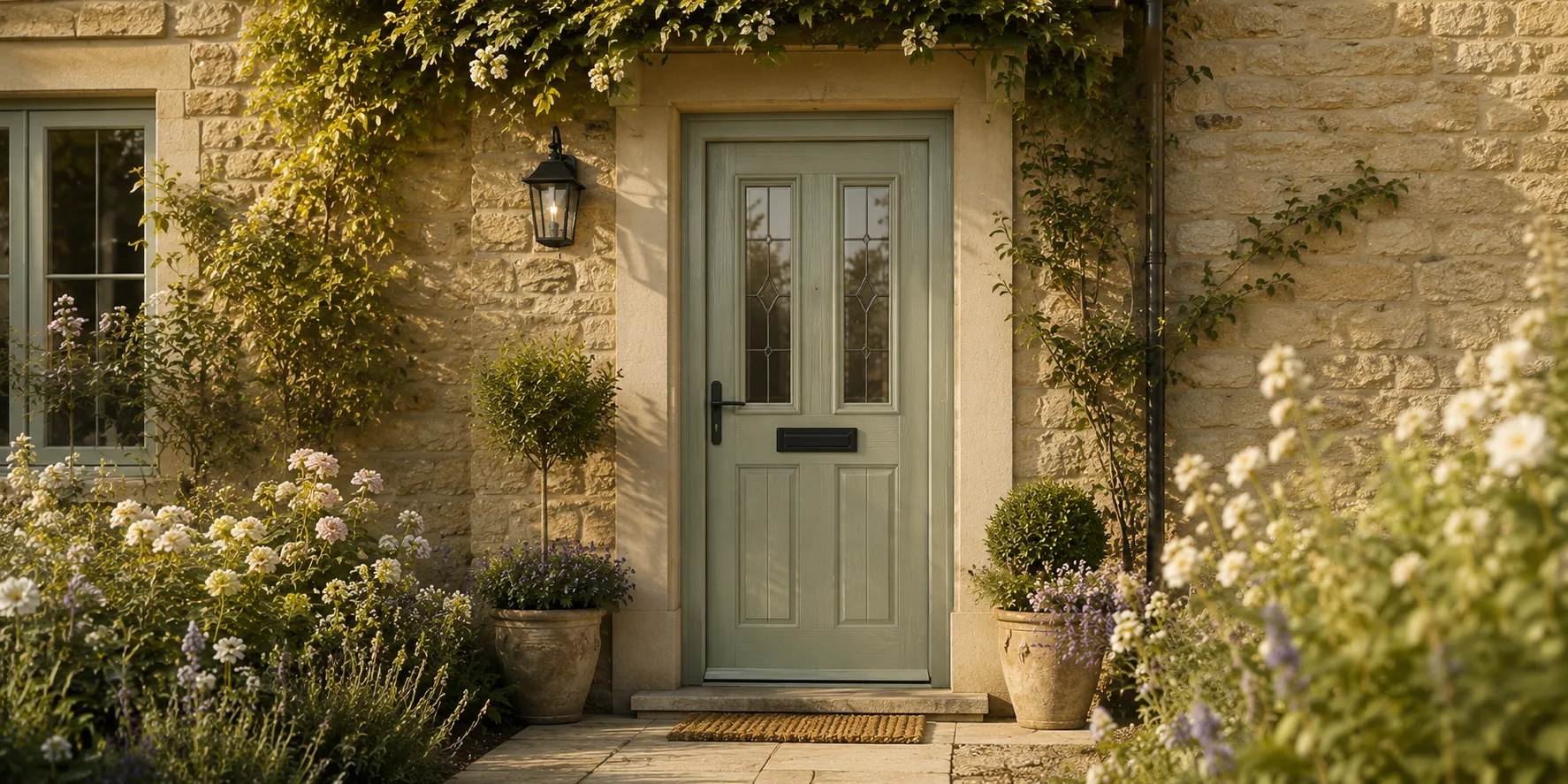
For most front doors, a composite door is the better choice. It is built around a solid, insulated core with a tough glass reinforced plastic skin, it stands up to weather without warping, and it looks far closer to a painted timber door than a uPVC panel door does. It costs more, and for the door people see first when they arrive at your home, that extra is usually money well spent.
A uPVC door still has its place. It costs less, it can be made to the same security standard when it is built and fitted properly, and for a back door or a side door into a garage or utility room it is often all you need. Both types can meet the enhanced security standard for UK doors and the energy standard for replacement doors, so the decision comes down to looks, how long the finish will last, and budget.
How the two doors are built
A uPVC door is made the same way as a uPVC window. A frame of uPVC profile, reinforced inside, holds an infill panel in the middle, either a foam-filled panel or a sealed glass unit. The panel sits in the door the way glass sits in a window, so most of the door's face is the panel rather than the frame around it.
A composite door is a single solid slab. The Glass and Glazing Federation describes composite doors as a blend of materials, typically uPVC, wood and glass reinforced plastic, and in practice that means an insulating core, which is foam or timber depending on the manufacturer, under a moulded glass reinforced plastic skin, hung in an outer frame. Because the slab is one piece rather than a frame around a panel, it is heavier and more rigid, which is part of why the GGF also notes that composite doors need professional installation.
Security
Neither material is automatically more secure. What matters is whether the door has been tested as a complete doorset to PAS 24, which the British Standards Institution describes as the standard that tests the ability of doorsets and windows to resist attacks from casual or opportunistic burglars. Composite and uPVC doors can both be built to pass it.
The lock is where many attacks are aimed. Both types use a multipoint lock, worked by lifting the handle and turning the key, and both rely on a euro cylinder that should be an anti-snap cylinder rated TS 007 3 star or Sold Secure Diamond. The door is also only as strong as its fixing into the wall. On one front door we fitted this summer, a problem only showed up once the old door was out of the opening, and we talked the customer through the options before the new door went in. That sort of thing can't be seen from outside, which is why the opening gets looked at properly on the day.
Insulation and draughts
A replacement front door fitted in an existing home in England has to reach a U-value of 1.4 W/m²K, or a Doorset Energy Rating of band B (band C if more than 60% of the door is glazed), under Approved Document L. A properly specified door of either type can meet that. Composite doors usually have the edge, because the whole slab is insulated rather than only the panel in the middle, and the GGF lists better insulation among their advantages.
We've found that draughts around a front door are more often down to adjustment and seals than to the material. A door that has dropped on its hinges no longer presses evenly against its seals, whatever it is made of, and a door that is never adjusted will eventually let cold air in at the top corner or along the bottom.
Looks and colour
This is where the two differ most. A composite door's skin is moulded with a woodgrain texture and panel detail, and it comes in far more styles. Our composite doors range includes traditional designs such as Butterley, Kingston and Moorgreen alongside contemporary ones such as Neath, Calder and Thames, and each can be ordered with different glass, colours and hardware.
Colour is the other big difference. Composite doors come in standard colours such as White, Blue, Anthracite, Black, Red and Green, and a long list of premium ones, from Chartwell Green and Clotted Cream to Sage and Putty, all shown on our composite door colours page. The most popular choices are Anthracite Grey, Black, White, Chartwell Green, Clotted Cream and Agate Grey. The glass can be chosen separately too, from clear and privacy glass to decorative designs, and our composite door glass styles page shows the options.
A uPVC door is usually white, with a smaller choice of foiled colours and panel styles. The GGF puts this plainly in its comparison, noting that uPVC doors may not have the same aesthetic appeal as other materials and that the options can be limited.
Maintenance and lifespan
Both are low-maintenance. A wash with warm soapy water, a check that the hinges and lock move freely, and an occasional adjustment if the door starts to catch will keep either type working for many years. Neither needs painting.
The finish is where they age differently. The glass reinforced plastic skin on a composite door is built to resist weathering and warping, with the colour part of a durable finish, while older white uPVC can dull or yellow after years of strong sun. For the frame material itself, the GGF says PVC-U usually lasts 20 years or more, and many composite doors sit in a uPVC outer frame too.
Cost
A composite door costs more than a uPVC door of the same size, and the GGF lists the higher initial cost as the main drawback. How much more depends on the style, the glass, the hardware and the size of the opening, which is why we price each door individually.
In our experience, a uPVC door works better than a composite for a back door or a side door into a garage or utility room, because it can be built to the same security standard for less money, and the thicker slab and richer finish of a composite matter far less on a door nobody sees from the street. For the front of the house, the look of a composite is usually worth paying for, because it is the door you see every time you come home.
What our customers have chosen
Doors come up often in our reviews. Of the 31 reviews on our Google profile at the end of September 2026, ten come from customers we fitted new doors for, including six front doors and a set of patio doors. They include a composite front door with a side light, finished in pebble grey, in Tonbridge, and a replacement front door in Guildford. Another was an odd-sized front door, where the customer had quotes from several companies before choosing us. An unusual opening needn't mean settling for a standard size, and that door was made to fit.
A standard composite front door can usually be fitted within a few hours, although it takes longer if the old frame has to come out or the opening needs work first.
If the glass in your current door has misted but the door itself is in good condition, you may not need a new door at all, because misted double glazing in a door panel can usually be replaced on its own.
For a front door that has to look right, keep the heat in and last, we would point most homeowners towards composite, and for a back or side door, uPVC is often the sensible choice. Contact us at KM Glazing to arrange a free, no-obligation quote, and we can help you see the colours before you choose, because they look different in daylight and against your own brickwork.
