
What Is the Most Secure Front Door for a UK Home?
Doors · 14 October 2026 · Kieran Myers
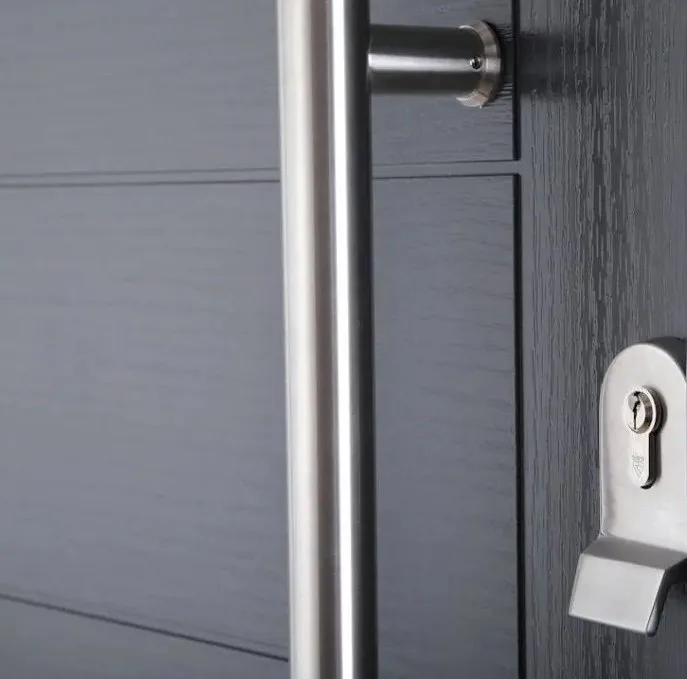
For most UK homes, the most secure front door is a doorset certified to PAS 24, and ideally approved under Secured by Design, with a multipoint lock and an anti-snap euro cylinder rated TS 007 3 star or Sold Secure Diamond, fitted properly into a sound opening. In practice that usually means a composite door, although a uPVC or aluminium door built and certified to the same standard can match it.
The material matters less than most people expect. A door's security comes from how the complete doorset has been tested, from the cylinder in the lock, and from how well it is fixed into the wall. A heavy door with a cheap cylinder can be less secure than a lighter one with a good cylinder.
What PAS 24 means
PAS 24 is the UK specification for the security of doors and windows in homes, published by the British Standards Institution. The BSI describes the current version, published in 2022 and amended in 2024, as setting out how to test the ability of doorsets and windows to resist attacks from casual or opportunistic burglars, and it tests complete, working doorsets rather than individual parts. The BSI also notes that it forms the backbone of Part Q of the building regulations.
Part Q, set out in Approved Document Q, came in on 1 October 2015 and requires the doors and windows of new homes in England to resist unauthorised entry. The entrance doors on new-build homes have had to meet it for more than a decade. New-build glazing has been a core part of our business since the company was founded. For an existing home, Part Q doesn't apply to a replacement door, which is why it is worth asking whether the door you are being quoted for has been tested to PAS 24.
What Secured by Design adds
Secured by Design is the police-backed security scheme, and its approved products carry what it calls Police Preferred Specification. It goes a step beyond PAS 24 testing. As Secured by Design explains, the technical standards are the same as Part Q, but Secured by Design requires products to be fully certified, which means the factory making them is audited and the products are re-tested, whereas Part Q asks for testing only. If you want the highest level of assurance for a front door, a Secured by Design approved doorset is the one to ask for.
The cylinder matters more than the door
Most uPVC and composite front doors lock with a euro cylinder, the part your key goes into, and that is where many break-ins are aimed. The Master Locksmiths Association describes lock snapping, where a burglar breaks a vulnerable cylinder to open the lock, and says it can take just five to ten seconds. It also points out that while these cylinders are found on almost all uPVC doors, a significant number of composite and aluminium doors use them too.
The answer is an anti-snap cylinder tested to one of two standards, TS 007 3 star, shown by a kitemark with three stars on the face of the cylinder, or Sold Secure Diamond. The Master Locksmiths Association recommends both, and adds that the cylinder should not stick out more than 3mm beyond the handle, because a protruding cylinder gives a tool something to grip. Both lock brands on our partners list, Yale and Ultion, make cylinders that carry these ratings.
On a sound door, upgrading the cylinder is usually a better first step than replacing the whole door on security grounds alone, because lock snapping goes for the cylinder, and a 3 star cylinder closes that weakness for a fraction of the cost of a new door. If the door itself is in good order, closes properly and has a working multipoint lock, the cylinder is the first thing to look at.
Composite, uPVC, timber or steel
A composite door has a solid, insulated core under a glass reinforced plastic skin, and it is the usual choice when security and looks both matter. It is heavy and rigid, which makes it hard to force, and the good ones are tested to PAS 24 as complete doorsets.
A uPVC door can be just as secure if it is built and certified to the same standard, and the differences between composite and uPVC doors lie mostly in looks, insulation and cost. Older uPVC doors with basic cylinders and worn locks are the ones most worth upgrading.
A timber door's security depends heavily on its lock, and many insurers look for a mortice deadlock made to BS 3621 on a timber front door, so it is worth checking your policy. Steel doors are extremely strong, but for most homes a certified composite door gives the security a household needs without the look of a commercial door.
The glass in a front door
Most front doors have some glass, which raises a security question of its own. Glass in a door is in what the building regulations call a critical location, so it has to be safety glass, either toughened or laminated. Laminated glass holds together when it breaks, because a layer inside keeps the pieces in place, which makes it harder to get through. Our composite door glass styles page covers the designs, and composite door glazing can use toughened or laminated safety glass depending on the specification.
Think about where the glass sits in relation to the lock. A decorative panel is fine, but a large pane close to the handle side is worth specifying in laminated glass.
Fitting is part of the security
A door is only as strong as the frame it hangs in and the fixings that hold that frame to the wall. Some problems with an opening only show once the old door is out. On one front door we fitted this summer, an issue came to light as the old door was removed, and we explained it and talked the customer through the best way forward before the new door went in. Our glaziers hold level 3 NVQs, and we are members of Kent Trading Standards' TS Checked scheme.
Made-to-measure matters too. We fitted an odd-sized front door this summer for a customer who had quotes from several companies first, and a door made for the opening sits better in it, with even gaps and seals that meet properly, than a standard size packed out to fit.
A quick check of your own front door
Look at the face of the cylinder for the kitemark with three stars or the Sold Secure Diamond mark. Check how far the cylinder sticks out beyond the handle. Lift the handle and turn the key every time you leave, because a multipoint lock only engages its hooks and bolts when you do. If the door has to be lifted or pushed before it will lock, it has dropped on its hinges, which puts strain on the lock and should be adjusted. The same goes for windows, and a window that won't lock is as much of a gap in your security as a weak door.
If your front door fails any of those checks, it may only need a new cylinder or an adjustment rather than a new door. For a new one, look at our composite doors, then contact us at KM Glazing for a free, no-obligation quote, and we will tell you plainly whether your current door needs replacing or just a better lock.
