
Window Won't Lock? Why It Happens and What a Repair Involves
Repairs · 10 October 2026 · Kieran Myers
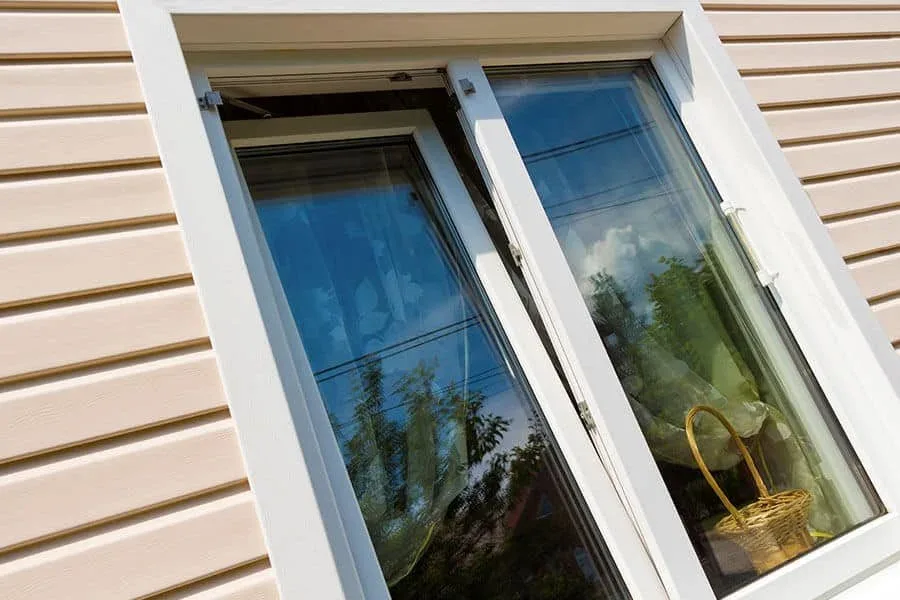
When a uPVC or aluminium window won't lock, the cause is usually one of three things. The handle or the gearbox inside the sash has failed, so turning the handle no longer moves the locking points. The sash has dropped on worn hinges, so the locking points no longer line up with the keeps on the frame. Or a keep has worked loose or broken. All three are repairs, and none of them means the window needs replacing.
Most are fixed with the right replacement part, often in a single visit. The exception is an older window whose parts are no longer made, where the fix can take a return visit while an alternative is found. Until then, a window that won't lock can usually be secured temporarily, and a ground-floor window is worth sorting quickly.
How a uPVC window locks
Turning the handle rotates a square spindle, which drives a gearbox set into the edge of the opening sash. The gearbox pushes a metal locking bar up and down the edge of the sash, and small cams or rollers on that bar hook behind keeps screwed to the frame. The sash itself hangs on a pair of friction hinges, the sliding arms at the top and bottom that hold it open and let it swing.
Every one of those parts can wear, and the way the window misbehaves usually tells you which one has gone.
The handle turns, but nothing locks
If the handle spins freely, the spindle has snapped or the handle has broken inside. A new handle fixes it. If the handle turns with resistance, or grinds, but the window stays unlocked, the gearbox is the likely culprit.
There is a simple test. Open the window, turn the handle, and watch the locking points along the edge of the sash. If they don't move, the gearbox or the spindle has failed. If they move normally, the problem is where they meet the frame, which points to a dropped sash or a damaged keep.
Don't force a stiff handle. A gearbox that is starting to fail can break completely under pressure, and if it breaks with the window shut, the window can be stuck closed. On an upstairs bedroom window that matters, because it may be the room's escape route in a fire. The Planning Portal explains that a replacement window should keep at least the same potential for escape as the one it replaces, and a window that can't be opened offers none.
The handle stops part way, or you have to lift the sash
If the handle will only go part of the way round, or the window locks only when you lift or push the sash, the sash has most likely dropped. Friction hinges wear with use, their screws work loose, and the sash sags at the handle side. The cams then hit the keeps instead of sliding behind them. Look for rub marks on the frame, or a sash that catches as it closes.
Replacing worn friction hinges is usually a better fix than moving the keeps to meet a dropped sash, because moving the keeps only hides the sag, and the hinges carry on wearing until the window catches on the frame or won't close at all. New hinges put the sash back where it was designed to sit, and the lock then works as it did when the window was new. Hinge repairs are on our repairs page, where we repair or replace worn, stiff or broken hinges to restore smooth operation and prevent further damage.
Locking handles and key cylinders
Many windows have a locking handle with a small key cylinder in it. If the key won't turn, the cylinder may be jammed or worn, and the usual fix is a new handle. A key that turns but doesn't release the handle can point to a broken part inside it. If you have lost the key, a replacement handle is normally simpler than trying to match an old key.
Tilt and turn windows
Tilt and turn windows, which suit upper floors because they open inwards and can be cleaned from inside, have a more involved mechanism. The handle points down to lock, sideways to open the window inwards like a door, and upwards to tilt the top of the sash in for air. The hardware includes a safety catch that stops the handle moving while the sash is open, so the window can't be switched between tilting and opening mid-swing. A handle that won't move is often a sash that isn't pushed fully closed. If it still won't turn once the sash is properly shut, stop rather than force it, and get the mechanism looked at.
When the parts are no longer made
Window hardware has changed many times over the years, and the gearbox or handle in an older window may no longer be manufactured. That doesn't mean the window has to go. Replacement gearboxes come in different sizes and designs, so there is often an alternative that can be made to fit.
One customer's bathroom window had stopped locking this summer, and when we looked at it, the original parts were obsolete. We found an alternative that we could make work, fitted it, and the window locks as it should again. On another repair, a customer needed new window hinges and a new locking mechanism in a door, and the right parts had to be ordered, so we made a temporary fix on the first visit and came back to fit the proper parts.
Locks and hinges come up more than any other repair in our Google reviews. One came from a customer in Maidstone who has used us several times, and whose latest job covered new window hinges, a back door lock and three misted double glazed units.
Is it urgent?
A window that won't lock is a security problem, particularly on the ground floor or anywhere that can be reached from a flat roof. It is also worth checking your home insurance, since policies can set conditions about locks on accessible windows. If a window can't be secured before a repair, it can often be made safe temporarily. Emergency call outs are 24 hours via WhatsApp.
A window stuck shut is less of a security worry, but it is a ventilation and escape problem, and forcing it can make the repair harder.
Doors lock differently from windows. A uPVC or composite door uses a multipoint lock worked by lifting the handle and turning the key, and many of its faults come from the door dropping on its hinges. If a door is beyond adjustment, the choice between composite and uPVC is the next thing to think about.
What to tell us before we visit
A clear photo of the handle, and one of the edge of the opening sash with the window open, helps us identify the hardware before we arrive, because many gearboxes and hinges carry the maker's markings. Tell us what the handle does, whether it spins, stops part way or won't move, and whether the window has been getting harder to close over time. The Glass and Glazing Federation's advice on when to repair or replace windows lists damaged hinges and broken handles among the faults that call for a repair.
If a window won't lock, the fix is usually a handle, a gearbox or a pair of hinges rather than a new window. Contact us at KM Glazing with a photo and a description of what the handle is doing, and we will arrange a free, no-obligation quote for the repair.
