
Repair or Replace Your Double Glazing? How We Decide
Repairs · 30 October 2026 · Kieran Myers
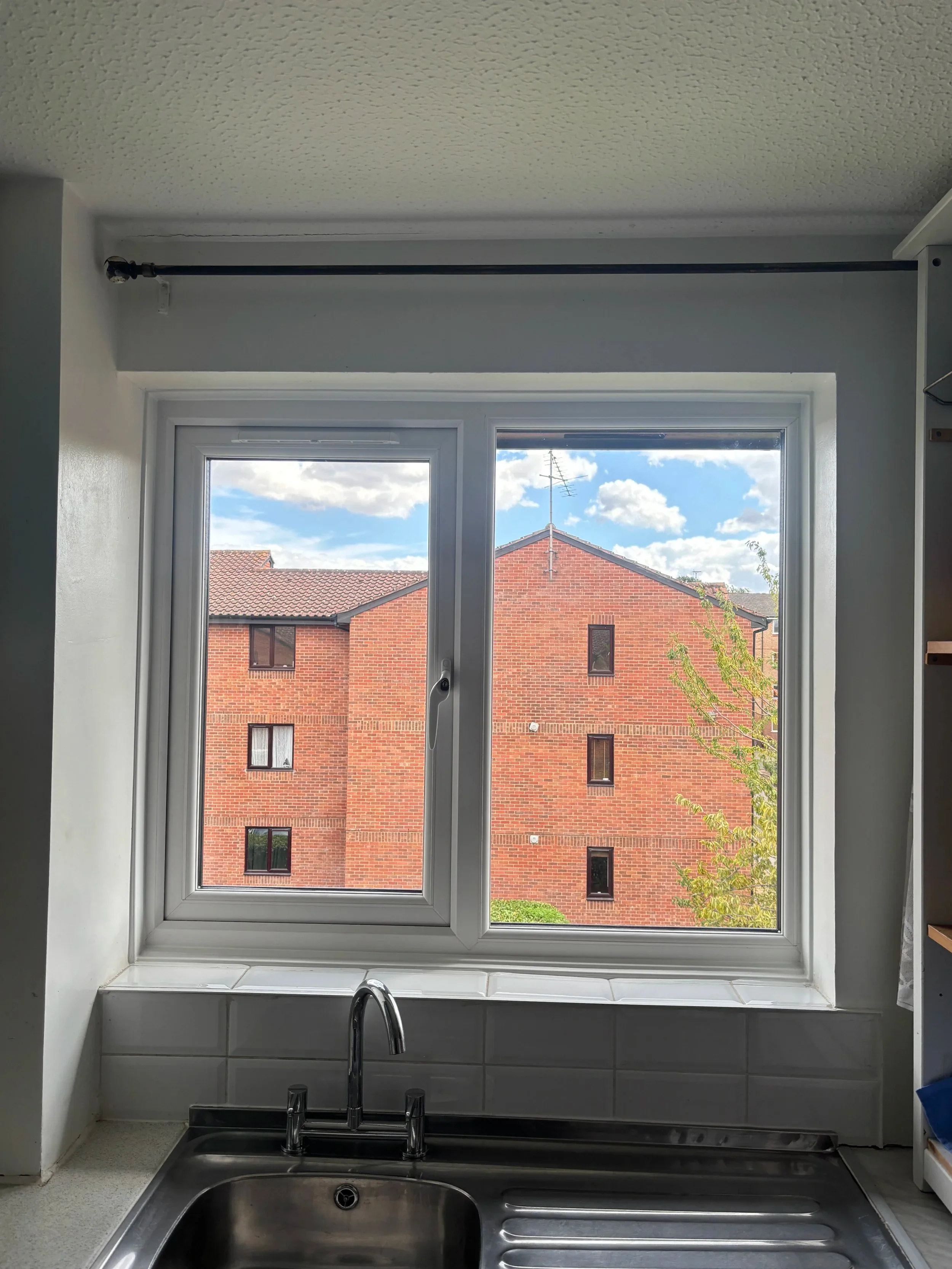
If the frame is sound, repair it. Many faults in double glazing are in a part that can be swapped on its own, the sealed glass unit, a hinge, a handle, a lock or a roller, and none of those means the whole window or door has to go. When we replace failed or damaged glass, we keep the existing frame 90% of the time. Replacement makes sense when the frame itself has failed, when the window is single glazed or very old double glazing, when several things are wearing out at once, or when you want a different style or a better performing window.
The decision starts with the frame, then the moving parts, then the glass. If the frame is straight, solid and sealed to the wall, everything else can usually be repaired or replaced inside it. If the frame is rotten, split, warped or no longer weathertight, repairs to the parts inside it are money spent on something that is coming out anyway.
Start with the frame
Look at the frame from inside and out. On uPVC, check for cracks at the corners, frames that have bowed or twisted so the sash no longer meets them evenly, and plastic that has gone brittle. On timber, press the bottom rail and the sill with a screwdriver tip. Soft wood that gives is rot, and paint that keeps flaking in the same place usually points to water getting in. On old aluminium, look for corrosion and for frames that run with condensation because they have no thermal break.
Then check the seal between the frame and the wall. Gaps in the sealant outside, damp patches on the reveals inside and cold draughts round the edge of the frame are often a fitting issue rather than a failed window, and resealing can be enough. If the frame has moved in the opening, or water is getting in behind it, that is a bigger job.
A sound frame is worth keeping. A frame that has failed is the clearest reason to replace.
Faults that are usually a repair
Misted or broken glass
Condensation between the two panes means the seal of the sealed unit has failed. It can't be cleared, but the unit can be replaced on its own, made to the same size and fitted into the existing frame. Replacing only the unit in misted double glazing saves the time and cost of a new window. Cracked, chipped or smashed glass is the same job, a new unit in the old frame.
The building regulations for doors and windows treat glass in a door up to 1500mm from the floor, and glass in a window up to 800mm from the floor, as being in a critical area, so a replacement there should be safety glass.
Hinges, handles and locks
Stiff, dropped or jammed windows are often caused by worn hinges or faulty mechanisms, which can usually be repaired. A handle that turns without locking usually means a worn gearbox or a keep that no longer lines up, and the causes and fixes for a window that won't lock apply to most uPVC and aluminium windows. On doors, a lock that has become hard to turn can be a door that has dropped slightly in its frame, and an adjustment puts it right.
These repairs can come together. One repeat customer in Maidstone had window hinges, a back door lock and three misted glass units replaced in the same set of jobs this summer.
Doors that drag or won't close
Patio doors, French doors and bi-folds wear their rollers, hinges and keeps, and they drift out of line over time. The signs of a dropped bifold door are much the same on any door, and the repair is an adjustment or new parts rather than new doors. Our repairs service covers composite, uPVC, aluminium and bi-fold doors, and we fix locks, handles, rollers and door alignments on all of them.
Draughts and condensation on the room side
Worn or flattened seals let in draughts, and new seals can often be fitted. Condensation on the inside of the glass is usually about moisture and ventilation in the room, not the window, and the advice on condensation on the inside of windows explains how to tell the difference before spending anything.
When replacement is the better answer
Replace when the frame has failed, as above. Replace single glazed windows if you want a warmer room, because no repair turns single glazing into double. And think hard before repairing very early double glazing that has several faults at once, because each repair is fixing one part of a window whose other parts are just as old.
Replacement windows also come with a performance standard that repairs don't have to meet. Under Approved Document L, a new or replacement window in an existing home should reach a U-value of 1.4 W/m²K or a Window Energy Rating of band B, and a door 1.4 or a Doorset Energy Rating of band C where more than 60% of it is glazed, or band B for other doors. Our windows and doors page explains U-values, G-values and Window Energy Ratings if you are comparing quotes.
That standard is why replacing a whole house of old windows can make a real difference. When we replaced every double glazed window in a house in Bearsted this summer, the customer wrote that the new windows had made a huge difference to the warmth and appearance of their home.
Style is a fair reason too. If you want slimmer frames, a different colour or a different way of opening, that is a replacement, not a repair. The aluminium windows page compares aluminium with uPVC, and for period houses the sash windows page covers what suits an older front.
What the rules say about each
The current Approved Document L draws a clear line between the two. It defines a controlled fitting as the entire unit of a window or door, frame included, and says that replacing the glazing, or a window or door in its existing frame, is not providing a controlled fitting and does not need to meet the energy efficiency requirements. So a new sealed unit, a new hinge or a new lock in your existing frame is a repair in the eyes of the regulations.
Replacing the whole window or door is different. Replacement windows and doors are on GOV.UK's list of work that needs building regulations approval, and you don't need to get approval yourself if the installer is registered with a competent person scheme for replacement windows and doors. GOV.UK warns that without approval you won't have the certificates of compliance you may need when you sell your home, so ask any installer how the work will be signed off before you agree to a replacement.
Questions worth asking whoever quotes
Ask what exactly has failed, the frame, the glass or a part. If the answer is a part, ask why it can't be repaired. If you are told the whole window needs replacing, ask to be shown what is wrong with the frame. A good glazier will be happy to explain, and the repairs page on our own site puts it simply, no unnecessary replacements.
Ask whether the parts are still available. Hardware for older windows is sometimes no longer made, but an alternative can often be found that works. Where the right part has to be ordered, a temporary fix can keep the window or door secure in the meantime, which is how we handled one customer's window hinges and door lock in September before coming back to fit the parts.
If your home is less than two years old, check first whether the developer should be fixing it, because window problems in new-build homes are usually theirs to put right in that period.
We repair and replace windows and doors across Kent, from Maidstone and Rochester to Sittingbourne and Canterbury. If you are not sure whether yours needs a repair or a replacement, send us a photo on WhatsApp or contact us at KM Glazing, and we will tell you which it is and why.
